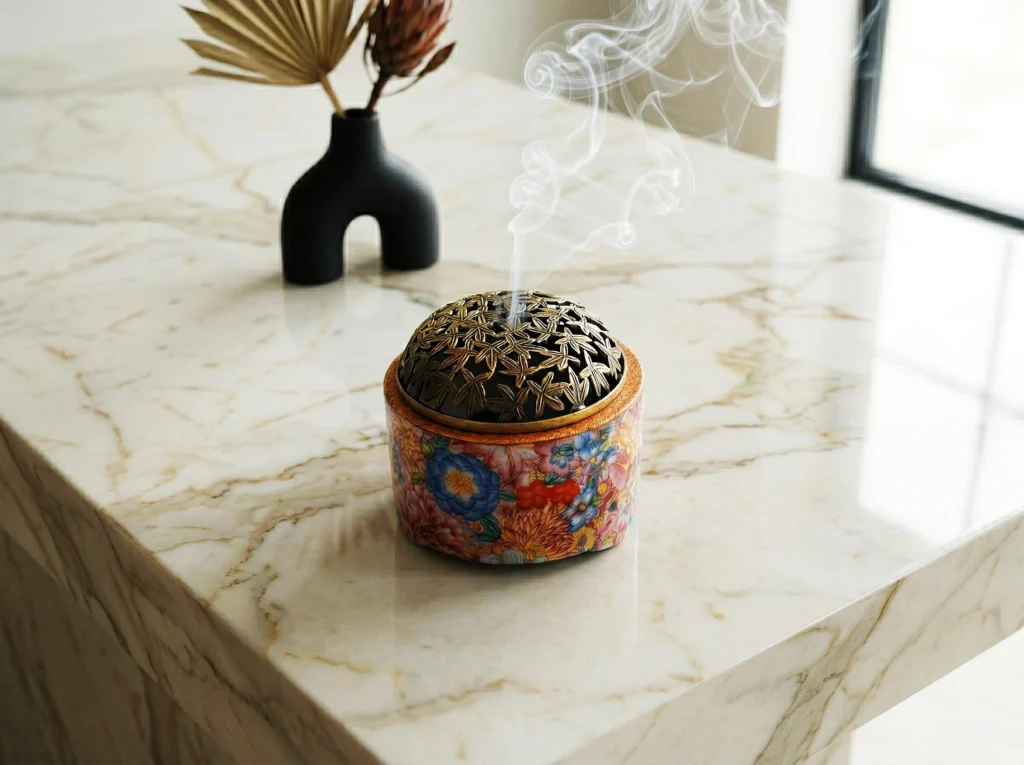
Here is how to clean an incense burner: wait until it is completely cool, tip the ash out into a bin, rinse the burner with plain water and let it dry fully before you light anything in it again. For most burners and holders that is the whole job. Soft cloths, patience and a dry shelf do more than any cleaning product.
The details still matter, especially if the burner is something you chose for how it looks on a table. Glaze, enamel and copper each like slightly different handling, and a few habits keep a piece looking the way it did when it came out of the box. Below is the routine we follow for our own burner and holder, a quick table for the marks people ask about, and a short FAQ.
Why a clean burner is worth five minutes
Ash on its own is mostly harmless. It is dry, light and easy to tip out. The trouble starts when it sits. Old ash can pick up moisture from the air and cake into the corners, and a damp layer under a fresh coil can make it burn unevenly. Leftover ash also carries a faint stale note that sits underneath the next scent, which is a shame when you have chosen an incense for its character.
Before you start: let it cool completely
Most chips and cracks start here. Ceramic that has just held a burning coil can still be warm well after the smoke stops, and cold water on warm ceramic is a bad combination. A coil in our Hundred Blossoms Coil Incense Burner burns for about an hour and a half to two hours depending on airflow, so plan to clean it later that evening or the next morning rather than straight away.
A simple test: if the outside of the burner feels like room temperature against the back of your hand, it is ready. If you can feel any warmth at all, leave it.
How to clean a coil incense burner, step by step
Hundred Blossoms has a ceramic body painted with enamel flowers and a copper lid. The coil sits inside and the ash collects in the ceramic body, which makes cleaning simple. The product page puts it plainly: once it is cool, empty the ash and rinse the burner. Here is how we do that in practice.
1. Lift the lid and set it aside
Take the copper lid off first and put it somewhere soft, like a folded tea towel. Lids get knocked over more than bodies do, and a soft landing spot keeps the edge from picking up dings.
2. Tip the ash out
Hold the burner over a bin, or over a sheet of newspaper you can fold up afterwards, and tip it gently. Most of the ash will slide out in one go. If a little clings to the bottom, a soft dry brush or a folded paper towel will lift it.
3. Rinse with plain water
Rinse the inside under lukewarm running water and rub lightly with your fingers or a soft cloth to loosen any film. Plain water is usually enough for ash residue. Keep the rinse short rather than leaving the burner to soak; there is no reason to sit glaze and painted enamel in a basin when a quick rinse does the job.
4. Rinse the lid separately
Give the copper lid a quick rinse too, then dry it straight away with a soft cloth. Getting water off metal promptly helps avoid water spots. Over time, copper naturally darkens and develops a patina with handling and heat. Many people like that look. We wouldn’t attack it with polish or abrasive pads.
5. Dry everything fully
Pat the outside dry, then leave the body upside down on a towel for a few hours, or overnight if your kitchen is humid. A burner should go back on the shelf bone dry. Moisture trapped inside can dampen the next coil, and our coil incense, like all incense, is happiest kept dry.
How to clean a stick incense holder
A stick holder is even simpler, because it has no lid and no enclosed body. Our Willow Leaf Stick Incense Holder is high-fired ceramic with a food-safe glaze, and its curved surface catches the ash as one stick burns for about fifty minutes. The care note on the product page is one line: after use, rinse it gently with water and pat it dry.
In practice we tip the ash out once the holder is cool, run it under the tap, wipe the hole where the stick sits with a corner of soft cloth, and pat it dry. If the little stick hole has a stub of unburnt incense stuck in it, wiggle it out with a toothpick rather than forcing it, since the hole is where the ceramic is narrowest.
If you are new to stick incense, our guide on how to light an incense stick covers placement and putting a stick out early, which also keeps the holder tidier.
Quick fixes for common marks
Most marks on a burner or holder come down to ash that sat too long or a surface that stayed damp. These are general suggestions, and they all start with the gentlest option.
| What you see | Likely cause | What to try |
|---|---|---|
| Grey film after rinsing | Fine ash mixed with water | Rinse again and wipe with a soft damp cloth, then dry. |
| Caked ash in the bottom | Ash left for weeks, picked up humidity | Brush out what you can dry, then rinse and wipe. Repeat rather than scrub. |
| Faint brown ring | Residue where the coil or stick ended | Wipe with a damp soft cloth while rinsing, and repeat after the next use rather than scrubbing hard. |
| Water spots on the lid | Copper left to air dry | Dry the lid by hand right after rinsing next time. |
| Darker copper over months | Natural aging of copper | Nothing needed. Wipe with a dry cloth if it looks dusty. |
| Coil burning unevenly | Damp ash or a damp burner | Empty, rinse and dry fully before the next coil. |
What to avoid
- Cleaning while warm. Wait for room temperature every time.
- Abrasive pads and metal tools. Steel wool and scouring sponges can dull glaze and scratch enamel and copper.
- Harsh chemicals. Bleach, oven cleaner and strong household sprays are unnecessary for ash and can mark painted surfaces.
- Long soaks. A rinse is enough. Neither product page calls for soaking, and painted pieces are better off without it.
- The dishwasher. Both care notes describe hand rinsing, so that is the route we’d stick to.
How often should you clean an incense burner?
For a coil burner, after every coil is the easiest rhythm. One coil leaves a neat ring of ash, and emptying it each time takes less than a minute. If you skip a session, empty it before the next coil at the latest, so the new coil isn’t sitting on old ash.
For a stick holder, you can let the ash from two or three sticks gather if the surface has room, then rinse. If you burn a stick most evenings, a quick rinse at the end of the week keeps it looking fresh.
Some censers are designed to hold a permanent bed of ash or sand that you rake and keep. Hundred Blossoms is not one of them. Its instructions are to empty the ash once it is cool, so treat it as a vessel you reset each time. If you are still getting used to the burner itself, we wrote a short piece on using a coil incense burner without turning it into a project.
A short routine you can actually keep
Light the incense, stay nearby while it burns, and leave the burner alone until the next day. In the morning, tip the ash, rinse, dry and put it back. Never leave burning incense unattended, and keep burners and holders away from children, pets and anything flammable.
That is all a good burner asks for. It is there to be used, not just displayed, and a little care each time keeps it looking settled on the table.
FAQ
Can I use soap to clean an incense burner?
Start with plain water, which is what both of our product pages recommend, and a soft cloth. Ash residue usually rinses away without anything else. We’d keep harsh cleaners and abrasive pads away from glaze, enamel and copper.
What should I do with the ash?
Once it is fully cool, it can go in the household bin. Make sure there are no glowing bits left by waiting until the burner is cold to the touch.
Why does my burner smell like old incense?
Usually because ash has been left inside, or the burner went back on the shelf slightly damp. Empty it, rinse it and let it dry fully, and the next scent will come through more clearly.
Is it normal for the copper lid to change color?
Yes. Copper darkens gradually with heat, air and handling. It is part of how the metal ages and does not affect how the burner works.