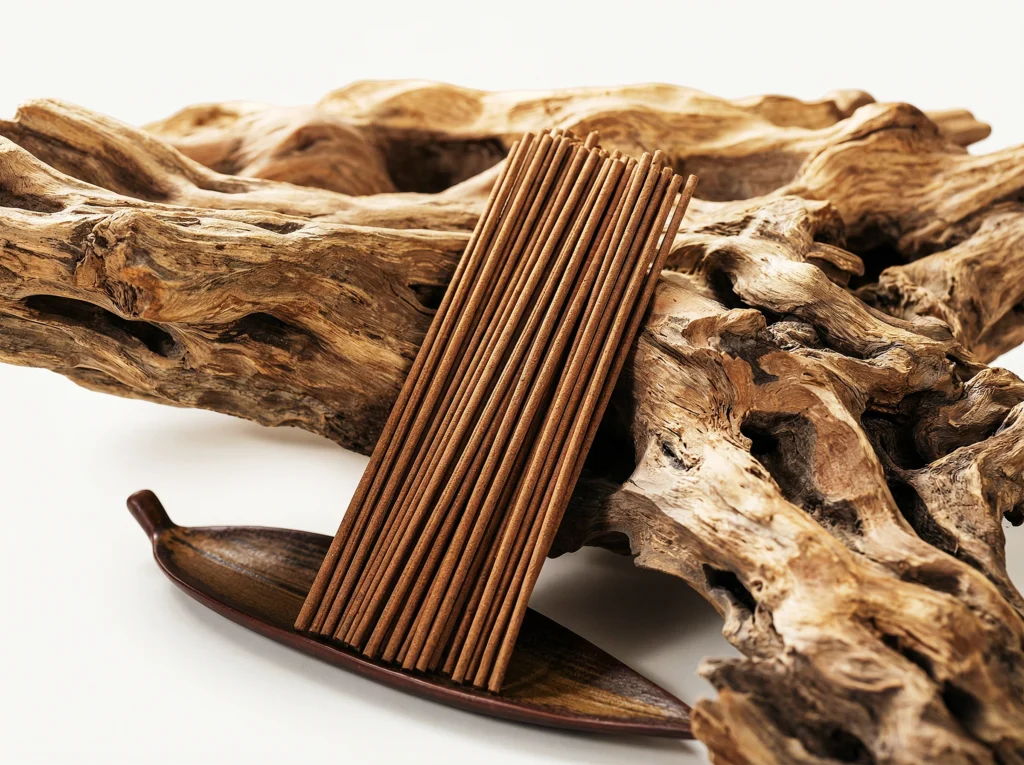
Agarwood vs sandalwood comes down to where the scent comes from and how it behaves. Cultivated agarwood gets its fragrance from a dark resin the tree builds up after it is wounded, so it smells layered and resinous and shifts as it warms. Sandalwood is fragrant in its heartwood, and its scent is soft, creamy and steady from start to finish.
Both woods have been burned and carved for centuries across Asia, and they often turn up in the same incense. They are not interchangeable, though. Below is a side-by-side look at how each one forms, what each smells like, how they work together in a blend, and why only one of them ends up in our bracelets.
Where each scent comes from
Cultivated agarwood: a scent the tree makes in response to a wound
Undamaged Aquilaria trees, the trees cultivated agarwood comes from, have pale, fairly plain-smelling wood. The fragrance appears when a tree is injured and responds by filling the damaged area with a dark, aromatic resin. Over the years, that resin soaks into the wood fibers, and the darker, resin-rich wood is what people harvest and use.
Ours comes from a 600-acre partner cultivation base in Maoming, Guangdong. Growers there tend the trees over many years and, when the time is right, remove the pale outer wood to reach the darker resinous material inside. If you want the full story of that process, our guide to Kynam and how it forms walks through it step by step.
Sandalwood: fragrance that lives in the heartwood
Sandalwood comes from trees in the Santalum family. Its scent does not depend on an injury. The fragrant oil sits in the heartwood and roots and builds up as the tree matures, which is why sandalwood smells like sandalwood whether it is a carved bead, a shaving of wood or a stick of incense.
That difference in origin explains a lot about the difference in character. One scent is a reaction, laid down unevenly over time. The other is part of the wood itself.
How they smell, side by side
Put a little of each on a warm surface and the contrast is easy to notice.
- Cultivated agarwood tends to open green and resinous, then settle into something softer, woody and quietly sweet. Many people describe a honeyed note. Because the resin is spread unevenly through the wood, two pieces can smell slightly different, and the same piece can seem to change over the course of an hour.
- Sandalwood is smooth, creamy and milky, with a gentle woodiness and very little edge. It tends to stay recognizably itself from the first minute to the last.
A simple way to put it: cultivated agarwood is a scent you follow, and sandalwood is a scent you settle into. Neither is better; they suit different moments.
Quick comparison
| Cultivated agarwood | Sandalwood | |
|---|---|---|
| Source of scent | Resin formed after the tree is wounded | Fragrant oil in the heartwood |
| Character | Resinous, woody, honeyed, layered | Creamy, smooth, soft, steady |
| How it unfolds | Shifts as it warms and over time | Fairly even from start to finish |
| Piece-to-piece variation | Noticeable; each piece has its own character | More consistent |
| Typical role in incense | Depth and the main woody voice | A smooth base that rounds out a blend |
Why the two show up together in incense
If you read the ingredient list on a box of traditional-style incense, you will often find both woods. That is not redundancy. They do different jobs.
Cultivated agarwood gives a blend its depth. Sandalwood fills in underneath it, smoothing the edges and giving the other notes something soft to rest on. Together they make a warm woody foundation that fruit, flowers or resins can sit on top of.
You can see this in both of our stick incenses, which list only the materials below and have no added fragrance:
- Pear Blossom stick incense is made from quince, cultivated agarwood and sandalwood. The quince opens with a soft, rounded sweetness closer to steamed quince than fresh pear. In the heart, honeyed cultivated agarwood and creamy sandalwood blend with the fruit, and the finish is quiet woody sweetness with a trace of quince.
- Brothers’ Study is made from cultivated agarwood, sandalwood, frankincense, amber, honey and jasmine flowers. Jasmine and frankincense come first. Then honeyed cultivated agarwood and creamy sandalwood form the warm base, with amber and a little honey softening it, before the florals fade into lingering woods.
In both, try to notice the moment the opening notes step back. What is left in the room, the warm, slightly sweet woodiness, is mostly these two woods working together. Each stick burns for about 50 minutes, depending on airflow, which is plenty of time to notice the change.
Burning versus wearing
Heat changes how both woods behave. Burned as incense, they release their scent into the room, and the whole arc from opening to finish plays out in under an hour. Unburned, as carved wood, they are much quieter.
That quietness is the point of olfactory jewelry. A cultivated agarwood bead worn on the wrist does not fill a room. Its scent is light, stays close to the skin, and comes forward with warmth and movement. You notice it when you raise your wrist, not when someone walks past you.
Why our bracelets use cultivated agarwood, not sandalwood
Sandalwood bead bracelets are common, and they are pleasant to wear. We chose cultivated agarwood for the Knowing the Self bracelets because of the very thing that makes it harder to describe: it changes. A layered, slowly shifting scent suits something you wear every day and come back to many times.
Each of our bracelets pairs copper-base low-temperature enamel with Near-Sinking Grade Kynam agarwood from cultivated trees. There is no sandalwood in them and no added fragrance. The scent you notice is the wood. Every bracelet is made by hand after you order.
One practical note. Like any natural wood scent, the scent of a bead softens a little with daily exposure to air, but it does not disappear the way a perfume does. When it seems faint, usually every week or two, rest the bracelet in its pouch for three to five days and the scent comes back.
Which one should you choose?
If you are choosing between the two woods in general, think about what you want the scent to do.
- Choose sandalwood if you like a soft, creamy, predictable woodiness that stays the same from start to finish.
- Choose cultivated agarwood if you enjoy a scent with layers, one that opens, shifts and leaves something slightly different each time.
- Choose a blend of both if you want depth without sharpness. This is where most good woody incense lives.
If you are new to cultivated agarwood and only know its name from perfume, it is worth reading about how cultivated agarwood differs from oud before you light your first stick. Oud perfume and the wood itself are related, but they do not smell the same.
FAQ
Is agarwood the same as sandalwood?
No. They come from different trees, and their scent forms in different ways. Cultivated agarwood gets its fragrance from resin the tree produces after it is wounded. Sandalwood is fragrant in its heartwood. They often appear together in incense because they complement each other.
Which of the two smells stronger?
Strength depends on the piece, the amount and whether it is burned. The bigger difference is shape. Sandalwood is steady and creamy. Cultivated agarwood is more layered and tends to change as it warms.
Do your bracelets contain sandalwood?
No. Our bracelets pair copper-base low-temperature enamel with Near-Sinking Grade Kynam agarwood, which is cultivated. There is no sandalwood and no added fragrance.
Does your incense have added fragrance?
No. Each incense contains only the materials listed on its product page. Pear Blossom is quince, cultivated agarwood and sandalwood. Brothers’ Study is cultivated agarwood, sandalwood, frankincense, amber, honey and jasmine flowers. Each box holds 30 g.
Can I tell the two apart in a blend?
Often, yes, once the opening notes fade. The creamy, rounded part of the base is usually the sandalwood. The honeyed, resinous depth underneath it is the cultivated agarwood. Burn one stick of the same incense on two different evenings and you may start to pick them out.
Never leave burning incense unattended, and keep it away from children, pets and anything flammable.