At 6:40, the apartment is finally quiet enough to hear the refrigerator settle. Your coat is over the chair, your phone is face down on the counter, and dinner is still a few minutes away. You want the room to feel different—not fragranced beyond recognition, just returned to itself.
That is where the difference between agarwood and oud matters.
They are often used as if they mean the same thing. They do not. Agarwood is the fragrant, resin-bearing wood itself. Oud is the name most often used for the distilled oil or the perfume style built around its dark, warm character. They can belong to the same scent family, but they arrive in a room very differently.
Agarwood is a material; oud is often a composition
If you know oud through perfume, you may know it as a deep note: polished wood, smoke, leather, sweetness, spice. It can be beautiful, but it is usually part of a formula. The fragrance is designed to project, hold its shape, and be recognized.
Natural agarwood asks for a closer kind of attention. Its character comes from the wood and its resin, so it can feel less linear and less declarative. On one evening you may notice a dry woodiness first; on another, a softer, almost honeyed warmth. The point is not that it performs the same way every time. The point is that it gives the room a quieter texture.
For someone who has spent years choosing perfume by the bottle, this can be a useful shift. You are no longer deciding what to wear into the world. You are choosing what kind of atmosphere to make for yourself once the world is outside the door.
The setting changes the question
Oud perfume belongs easily to a coat collar, a dinner reservation, the moment before you step into a crowded room. Agarwood incense belongs to a smaller interval: while water comes to a boil, while a record begins, while you change out of the clothes that carried your day.
Neither is more sophisticated. They simply answer different questions.
Choose oud when you want scent to become part of your presence. Choose agarwood when you want to notice the character of a material, and let the room keep its own voice.
A considered first encounter with agarwood
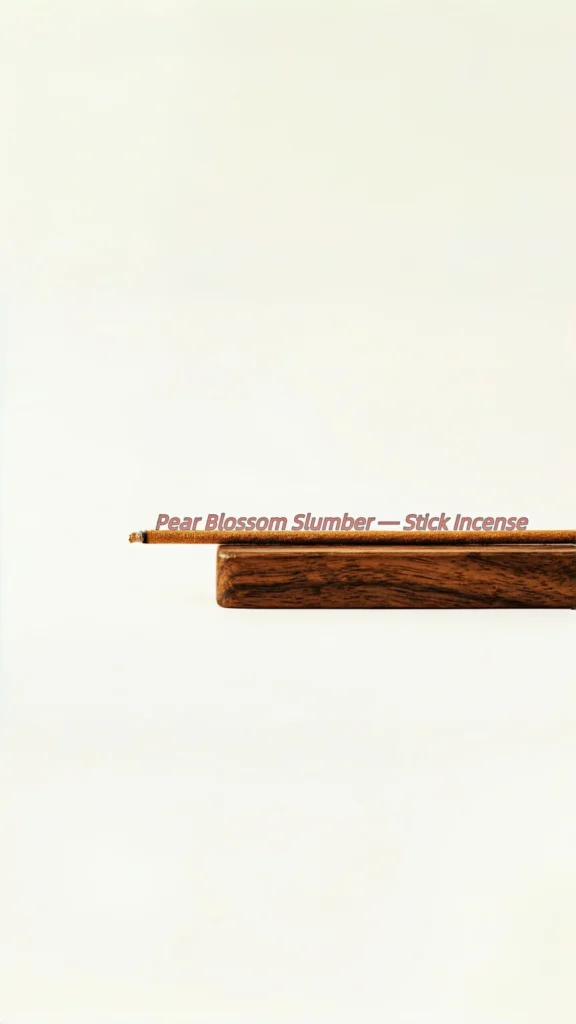
Pear Blossom Slumber — Stick Incense is a gentle place to begin. It is not made to overtake a room or announce a ritual. Think of it as an evening detail: the window opened a little, a book left face down, a table cleared enough for one unhurried meal.
Light one stick only when an adult is present and able to attend to it. Place it in a suitable holder on a stable, heat-resistant surface, keep it clear of curtains, paper, children, and pets, and extinguish it before leaving the room or going to sleep. The pleasure is in the time you are actually there for—not in leaving a scent running after the evening has ended.
Let the room stay recognizable
The finest scent choices rarely make every space smell the same. They let a home retain its own details: rain on a stone step, the linen on the sofa, the faint citrus from dinner, the cool air after a late shower.
Agarwood does not need to fill the room to change the feeling of it. For some evenings, that is exactly the appeal. It offers a pause without turning the pause into a performance.